Their situation, named
An owner-managed company, a landlord, a contractor. Visitors want their circumstances described, not "we help businesses of all sizes".

Industries · accountancy and advisory firms
Website design for accountants starts with one question: when a referred client or a local searcher lands on your site, can they tell within seconds that you handle their situation, who they would deal with and how to start? We audit that journey with CRISP, then fix what gets in the way.
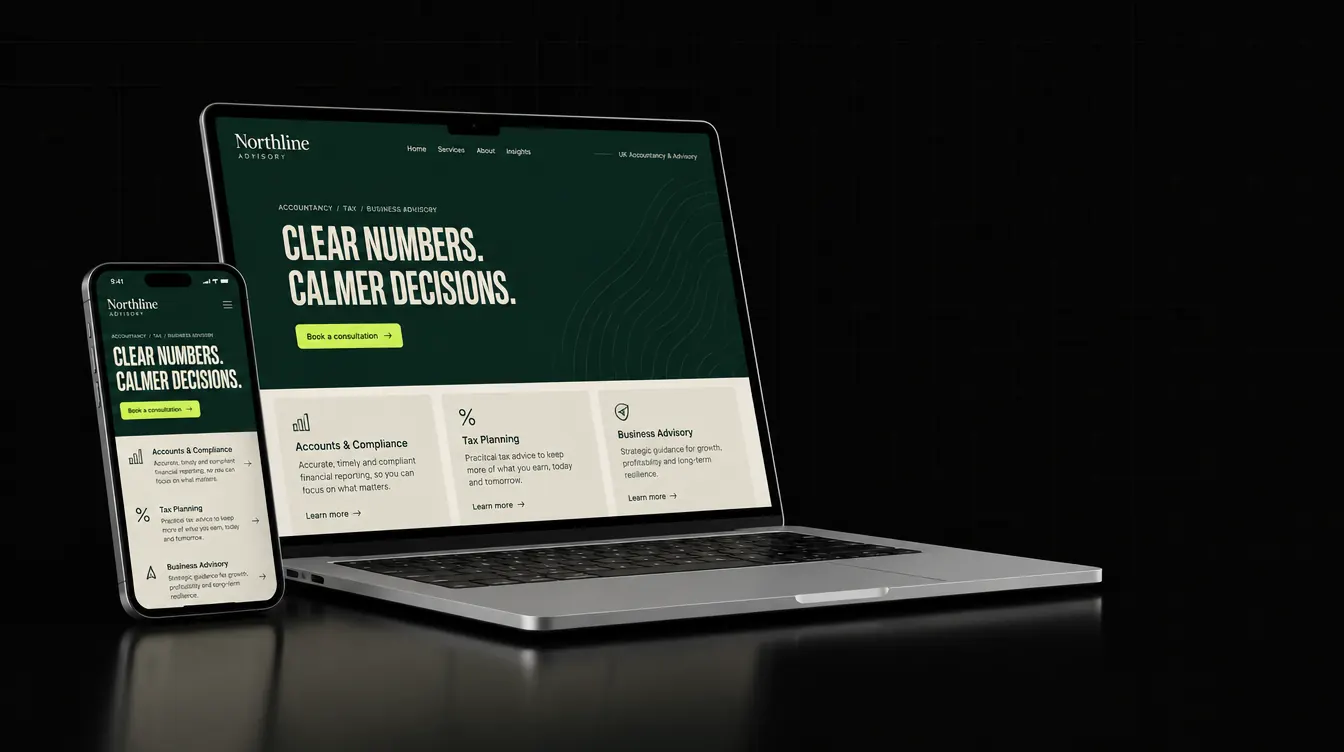
Your referrals check your website before they call.
Most accountancy firms win work through introductions: a client, a solicitor, a banker, a business contact. The introduction gets your name in front of someone. Then they look you up, and for a few minutes your website is the whole firm. If it reads like every other practice, or makes them hunt for the service they need, a warm lead can quietly go cold
Owners expect to stay with an accountant for years, so they look for signs that switching is worth the hassle.
An owner-managed company, a landlord, a contractor. Visitors want their circumstances described, not "we help businesses of all sizes".
What does "business advisory" actually include? Service pages should say what the work covers and who it suits.
Partners and managers with names, photos, qualifications and a line on what they focus on. Professional memberships stated accurately, not as a strip of unexplained logos.
You do not have to publish prices, but explaining how fees are set, whether they are fixed monthly and what switching involves removes a big reason to delay.
Cloud software, response times, a named contact. These details often decide between two equally competent firms.
A short consultation or a simple enquiry form, with a line on what happens next.
These are the patterns we check for across the five CRISP dimensions. Not every firm has all of them, and the audit shows which ones apply to yours. Read how the CRISP method works for the full framework.
Get the accountancy website checklist →One caution: accountancy firms must describe regulated services accurately, and your professional body's guidance on how to present memberships and services applies to the website too. We write clear copy, then you confirm anything that touches regulated activity before it goes live.
We would rather tell you now than halfway through a project. The audit is useful either way.
Smaller practices and sole practitioners can still run the free audit and use the three priority fixes themselves.
Each piece can stand alone. Your proposal names the work, review points and exclusions, so you only pay for what the evidence says the site needs.
See how projects are priced →We know partners are busy in January and around year ends. Each review is kept short and specific.
Run the CRISP audit, then review your services, client types, proof, enquiry path, analytics where available and technical constraints.
Output: evidence, risks and prioritiesConfirm the page list, who reviews regulated wording, integrations such as booking or portal links, review rounds and exclusions.
Output: written scope and project planStructure first, then visual design, then the responsive build. You approve each stage before the next starts.
Output: approved pages and working websiteCheck forms, redirects, analytics, accessibility, metadata and mobile layouts, then hand over with a note of what was checked.
Output: checked release and handoverWant the detail? Read the full delivery process.
The real difference is how much diagnosis happens before anything is designed.
| What matters | Fresh & Crispy | Typical agency | DIY / template |
|---|---|---|---|
| Starting point | Scored CRISP audit of your current site | Brief and mood board | A theme you pick |
| Service pages | Written around client types and situations | Often your existing copy restyled | You write them |
| Regulated wording | Drafted clearly, confirmed by you before launch | Varies | Your responsibility |
| Proof and people | Placed where visitors make decisions | Usually an about page | Depends on the template |
| Scope and price | Agreed in writing before work starts | Package or estimate | Subscription plus your time |
| Guarantees | None on results, clear measurement plan instead | Sometimes promised | None |
Generalised comparison, not a claim about any named agency.
Northline Advisory is a fictional firm. This is a concept, not client work and not a result. Drag the slider to compare a typical dated accountancy homepage with a rebuilt direction.
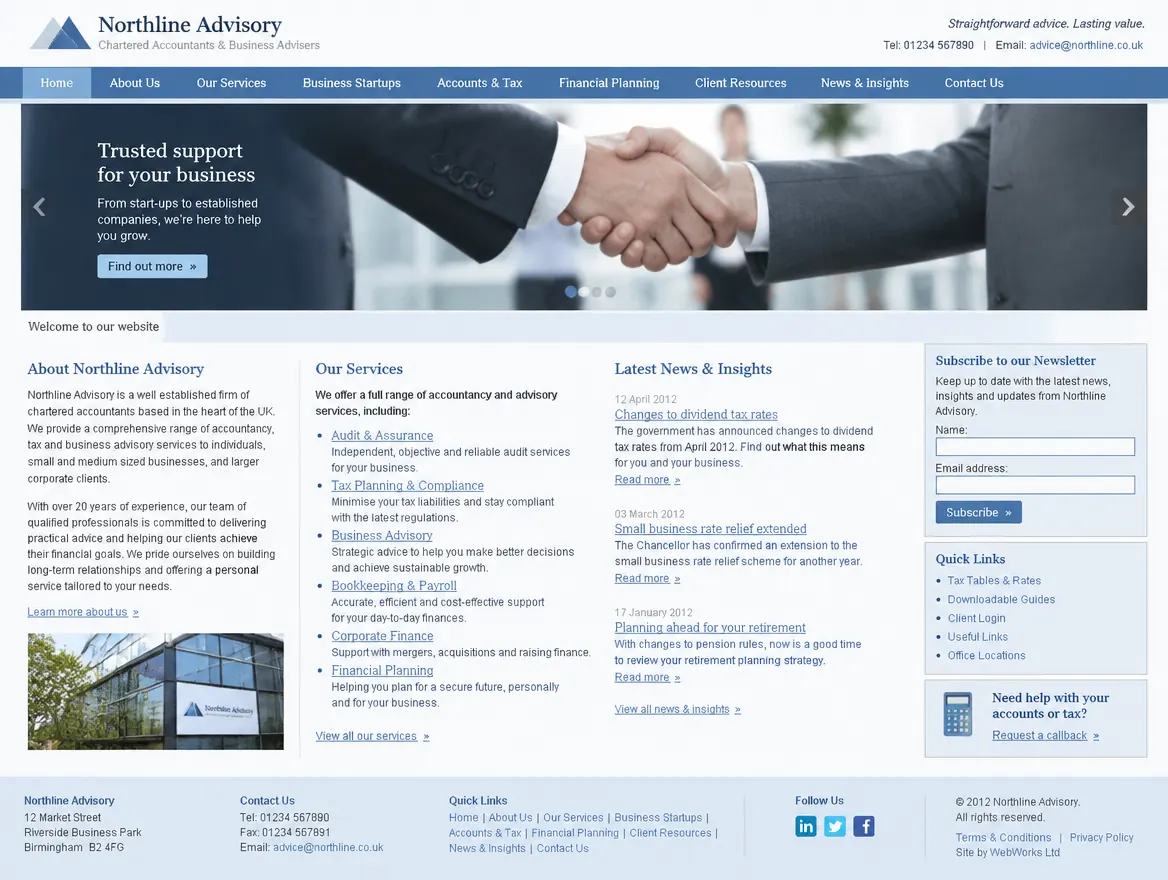
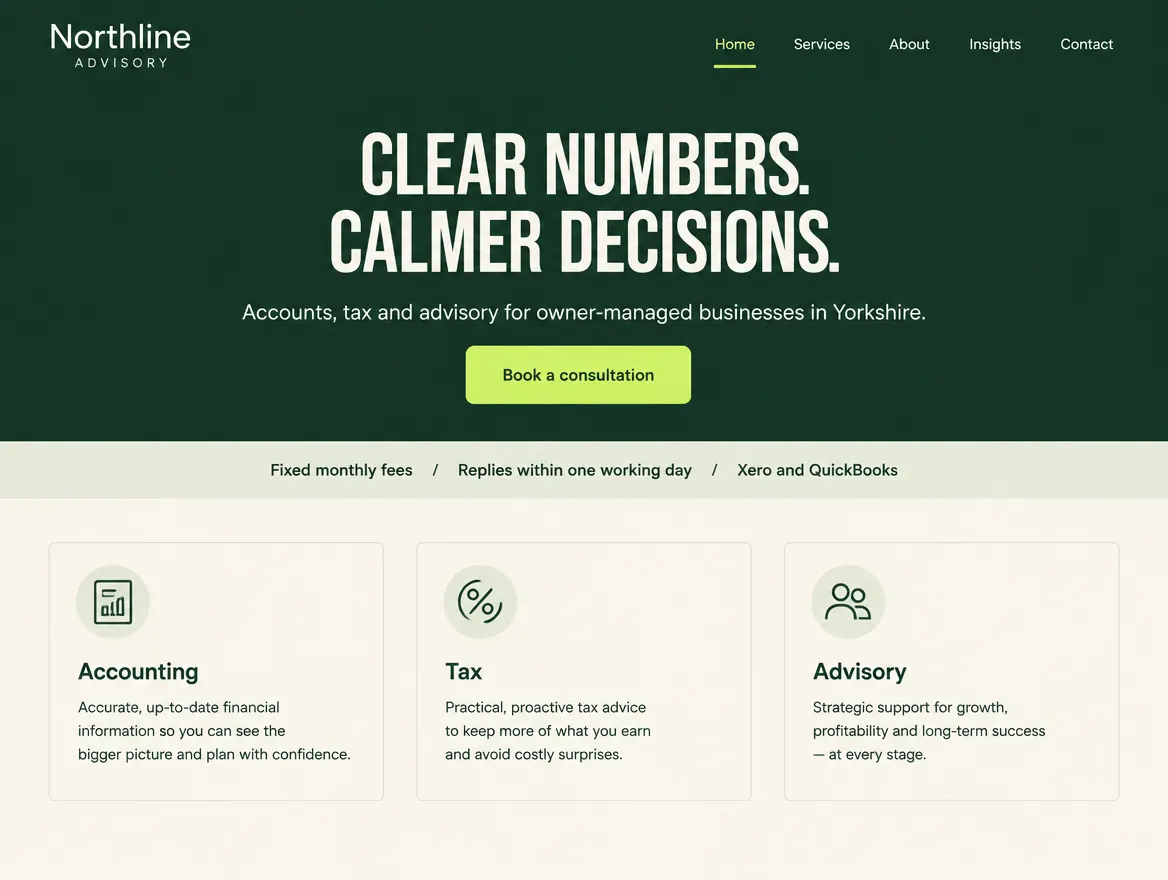 BeforeAfter
The reassurance items in the concept are placeholders. On a real site, every one would need to be true for your firm.
Straight answers, including the ones that do not flatter us.
There is no package price. A two-partner practice with four services needs a different scope from a multi-office firm with sector pages, a client portal link and a content migration. Cost follows the pages, content and proof work, integrations and migration involved. The proposal states the scope, exclusions and price or pricing basis before you commit.
It depends on the page list, how ready your content is and how quickly partners can review. The slowest part is often gathering team bios, sign-off on service descriptions and approval of any regulated wording. We set out the stages, review points and assumptions in the proposal rather than promising one timeline for every firm.
Usually more than it seems. A referral gives a prospect your name, and most will look you up before they call. At that point the website is checking whether you handle their situation, who they would deal with and how to start. A site that answers those questions supports the referral. A vague one gives a warm introduction a reason to stall.
Accountancy and advisory firms are our current focus, but we do not have a published accountancy case study yet, and we will not pretend otherwise. Our published case study is Vera Music, and its post-launch measurement is still pending. The Northline Advisory designs on this page are concepts for a fictional firm. The free audit lets you judge our thinking on your own site first.
No, but it is a sensible first step if you are not sure what is wrong. It scores your current site across five dimensions in about 60 seconds and returns three priority fixes. If you already have a brief, book a 15 minute call and we can discuss it directly.
No. Nobody can honestly guarantee enquiries or rankings, and you should be wary of anyone who does. What we can do is show the specific friction we found, explain why it may put a prospective client off and agree how the change will be measured. You get evidence and a measurement plan, not a promise.
That is a common story, so we put the answers in writing before work starts. The scope covers what is included, what is excluded, who reviews what, and the ownership, access and hosting arrangements at handover. If your current supplier is doing good work, we will say so and scope around it.
We need one decision owner, access to the current site and analytics where available, and a partner or manager who can confirm service descriptions and regulated wording. After launch you get a handover that states what was checked. Ongoing SEO, new service pages or conversion work are scoped separately if the evidence supports them.
Run the free CRISP audit on your firm's website for a score and three priority fixes, or book a short call and we will look at it with you.
Not ready yet? Work through the accountancy website checklist, or read why visitors leave a website. More sectors on the industries page.