


Recognisable offer
The right visitor can quickly understand who the service is for, what problem it addresses and why it is relevant to them.

By problem
Industries
 Our workSee all projects
Website design · clarity before decoration
Fresh & Crispy provides website design services for UK service businesses. We start with a scored audit of your current site, agree the page structure and scope in writing, then design and build a clear, credible website where every page has a job and every visitor gets a sensible next step.
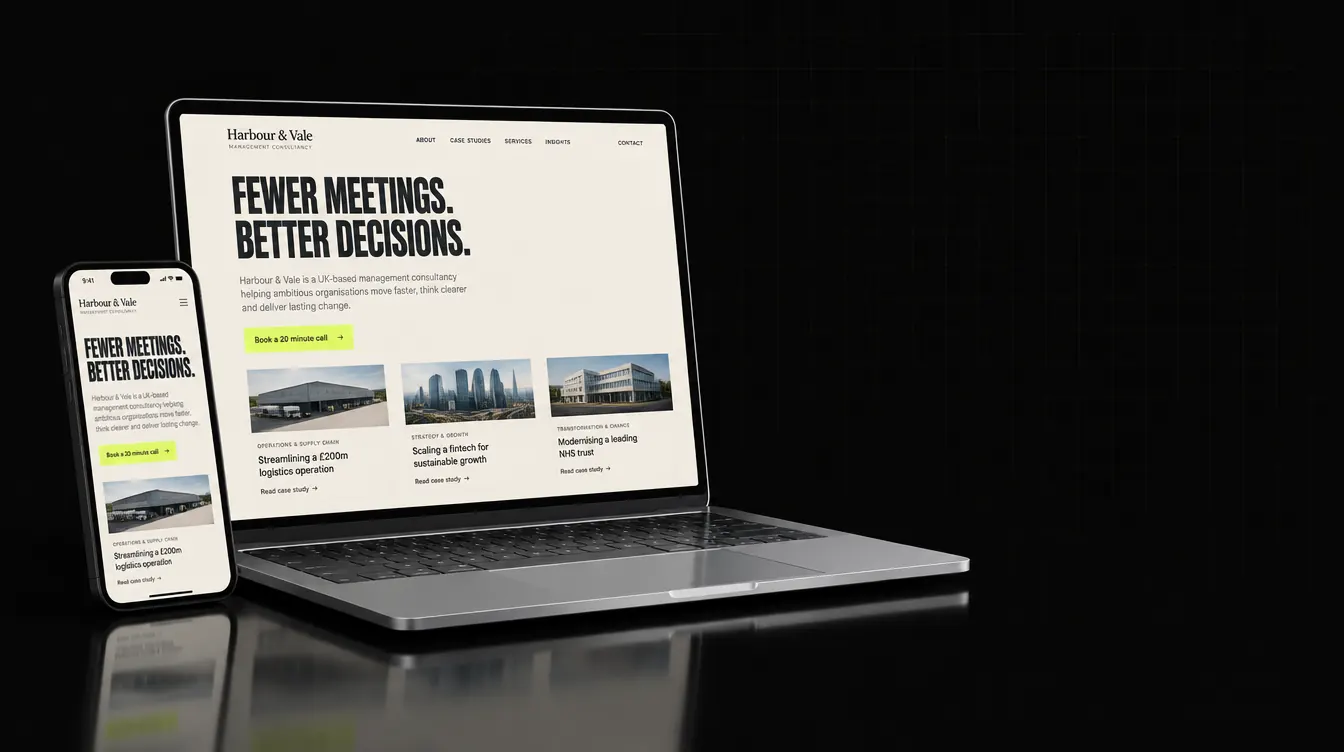
Your website does not need a new coat of paint. It needs to explain.
Most service firms are better than their websites suggest. The expertise is real, the reputation is earned, and referrals keep arriving. Then a prospect checks the site before calling, finds a vague headline, a services page written for insiders and a contact form buried at the bottom, and quietly moves on. A redesign that only changes fonts and photos leaves that problem exactly where it was.
Good website design follows the decisions your buyers need to make: what you do, whether they should trust you, and what they should do next. We design for those three decisions first and the visual style second.
The right visitor can quickly understand who the service is for, what problem it addresses and why it is relevant to them.
Testimonials, case studies, credentials and claims appear where they help someone judge the offer, with evidence gaps made visible rather than papered over.
Services, supporting content and calls to action are organised around real visitor questions rather than internal departments.
Responsive layouts, keyboard access, readable content and practical interaction states are designed as part of the system, not bolted on at the end.
Not every weak website needs replacing. Here is how we tell the difference, and we will say so plainly if the evidence points to something smaller.
Not sure which side you are on? Our guide to the signs your website needs a redesign covers the common triggers, and redesign versus rebuild explains when the platform itself is the problem. For accountancy practices specifically, see our notes on websites for accountancy firms.
Your proposal names the work, review points, responsibilities and exclusions before build begins. The exact mix depends on what the evidence says your website needs, so a five-page firm site and a fifty-page practice site are scoped differently.
See how website projects are priced →Worried a redesign will cost you search visibility? It can if redirects and metadata are an afterthought. Read will a website redesign hurt SEO for what we check before launch.
You see the structure before the styling and the styling before the build is complete. That keeps expensive surprises out of the process and gives you real chances to say no.
Review the current website, audience, available analytics, content, business priorities and technical constraints. The free CRISP audit is often the starting point.
Output: evidence, risks and prioritiesConfirm the page list, journeys, content owners, integrations, review rounds, measurement and exclusions.
Output: written scope and project planMove from structure to visual system to responsive build, with decisions reviewed at the stage where your feedback is cheapest to act on.
Output: approved pages and a working websiteComplete the accessibility, search, analytics, content and launch checks included in the scope, then hand over.
Output: checked release and handoverWant the detail? Read the full delivery process, or our honest answer to how long a website rebuild takes.
Each route can work. The difference is where the thinking happens and who carries the risk when it goes wrong.
| What matters | Fresh & Crispy | Typical agency | DIY / template |
|---|---|---|---|
| Starting point | A scored diagnosis of the current site | A brief and a mood board | A template you pick |
| Scope | Written, with exclusions, before work starts | Often a package, with extras found later | Whatever the builder allows |
| Order of work | Structure and journeys agreed before styling | Visual concepts often come first | Structure inherited from the template |
| Proof and claims | Every claim checked against evidence | Varies by team | Up to you |
| Who does the work | The senior people you speak to | Often handed to a delivery team | You, in the evenings |
| Search and launch checks | Redirects, metadata and analytics as scoped | Depends on the package | Plugins and good intentions |
Generalised comparison, not a claim about any named agency.
We do not force every project into one package or publish a price that only fits an imaginary average site. The proposal states the price or pricing basis, assumptions and exclusions before you commit.
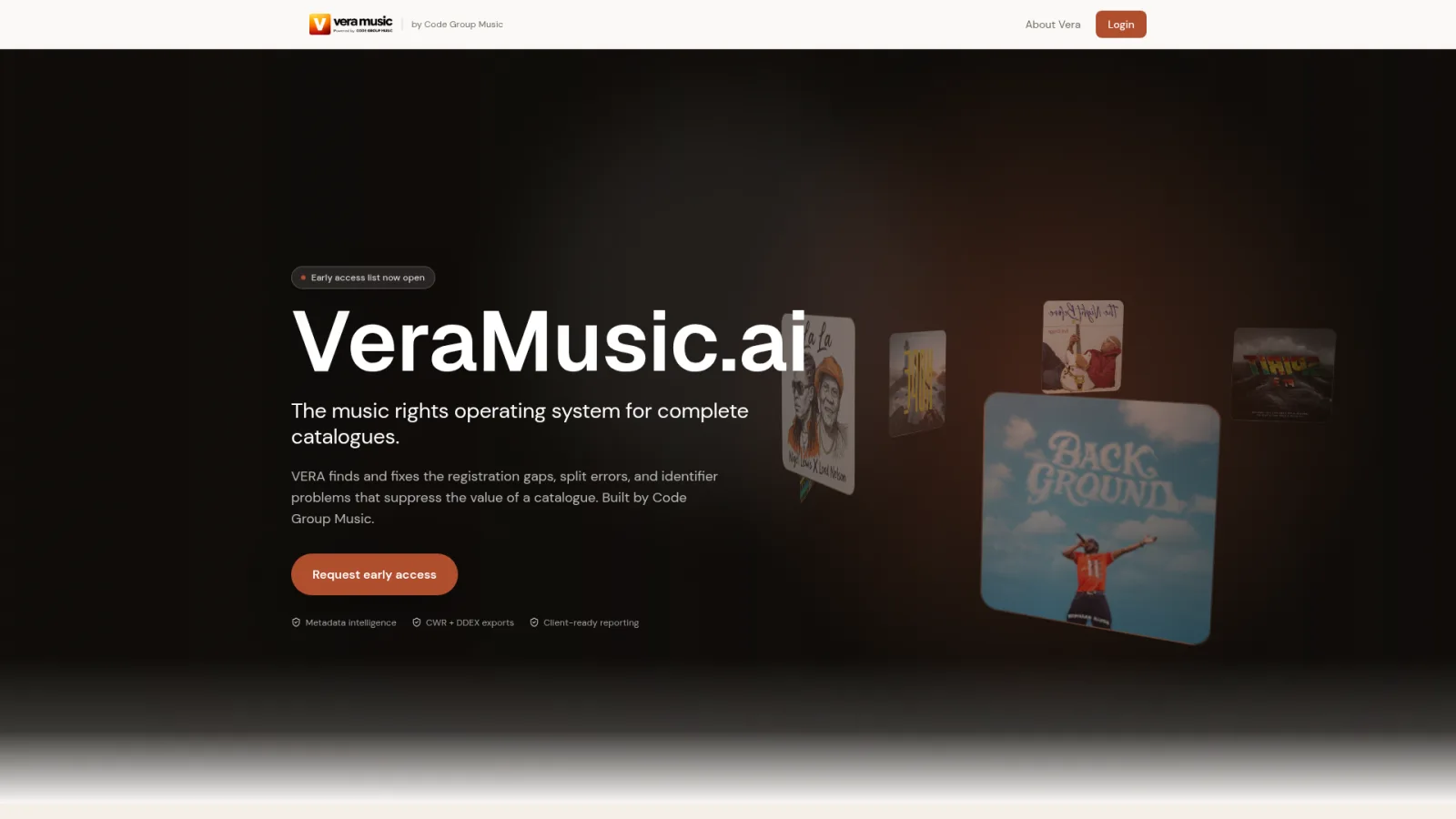
VeraMusic.ai · product website
A specialist music-rights platform needed to explain a new product without flattening the complexity. The delivered website gives creators and music professionals two distinct routes to start.
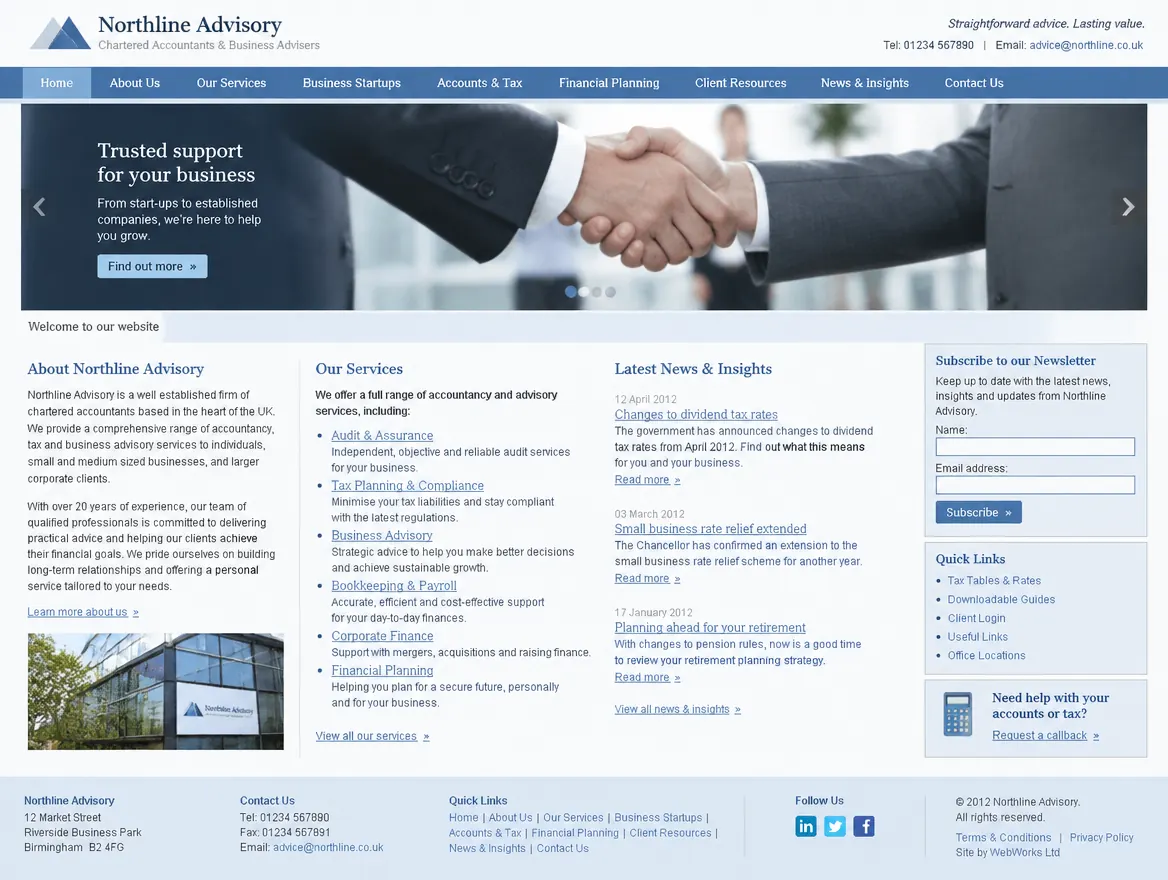
These are concept redesigns we created to show the approach, not client work. Drag the handle, or use the arrow keys, to compare each before and after.
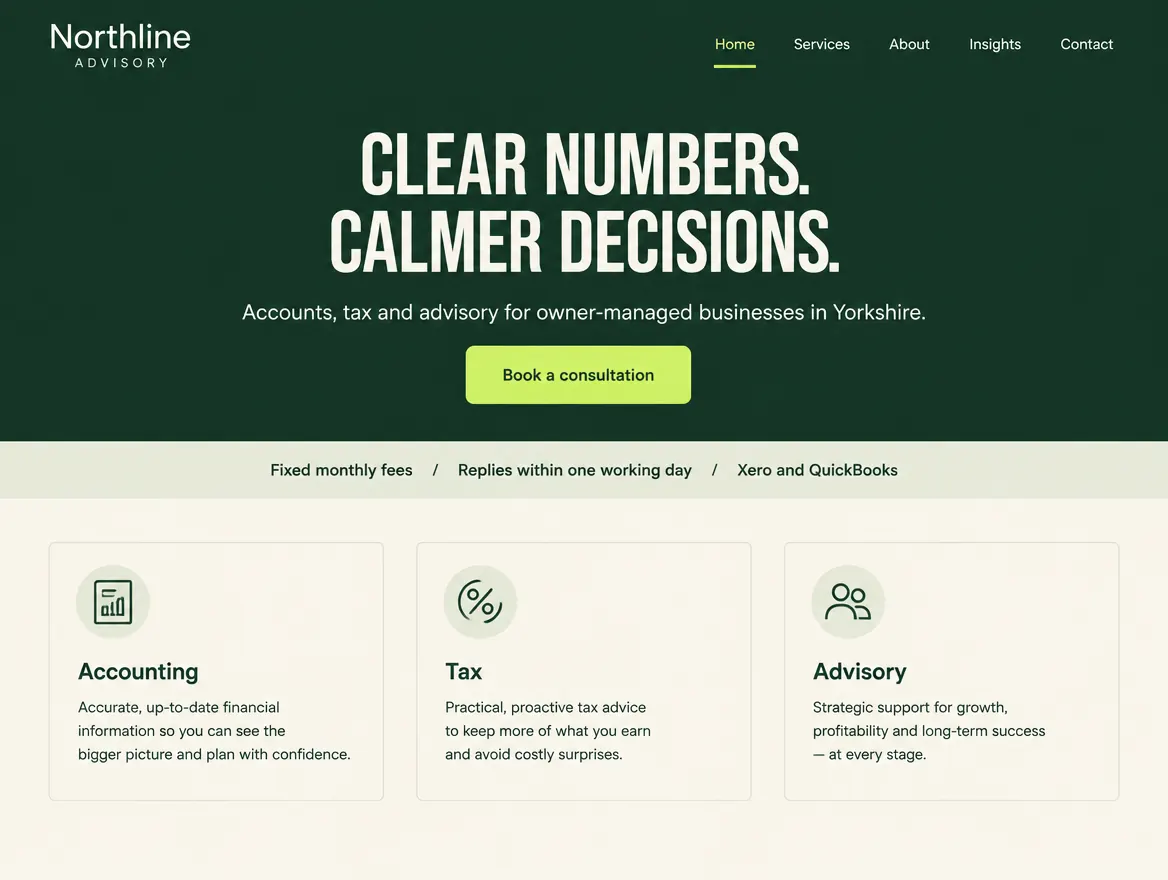 BeforeAfter
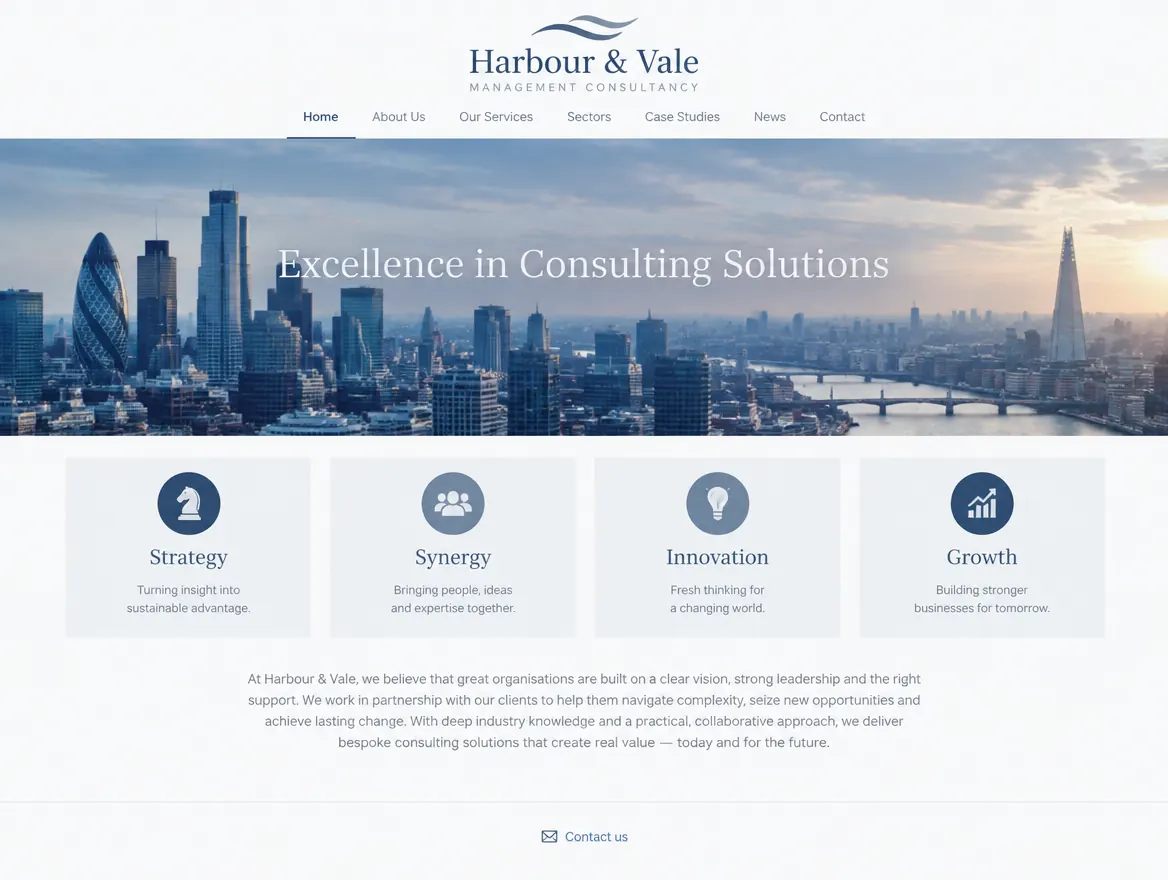
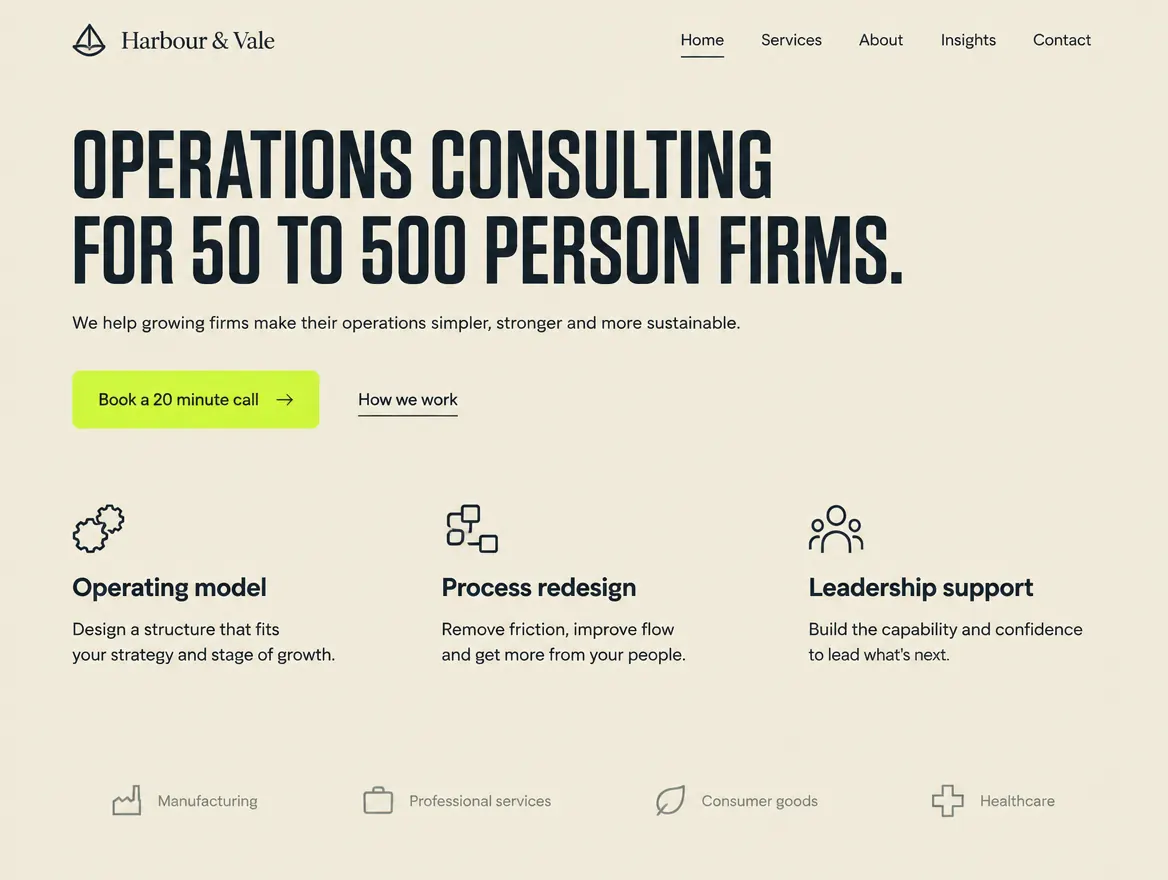 BeforeAfter
Straight answers now prevent scope disputes and surprises later. If yours is not here, ask it on a call.
There is no package price, because two websites with the same page count can need very different work. Cost depends on the unique pages, the content and proof to prepare, forms, analytics, integrations and any migration. Your proposal states the scope, exclusions and price or pricing basis before you commit, and our pricing page explains the factors in more detail.
It depends on the agreed page list, how ready the content is, the integrations involved and how quickly decisions get made on your side. We will not quote a timeline before we understand those things. The proposal sets out the stages, review points and assumptions, so you can see what drives the schedule and what would slow it down.
Most bad projects go wrong in the same places: vague scope, surprise extras, a big reveal nobody asked for and nobody senior doing the work. We agree scope and exclusions in writing first, show structure before styling so you can object early, and the people you speak to are the people doing the work. If something falls outside scope, we say so before doing it.
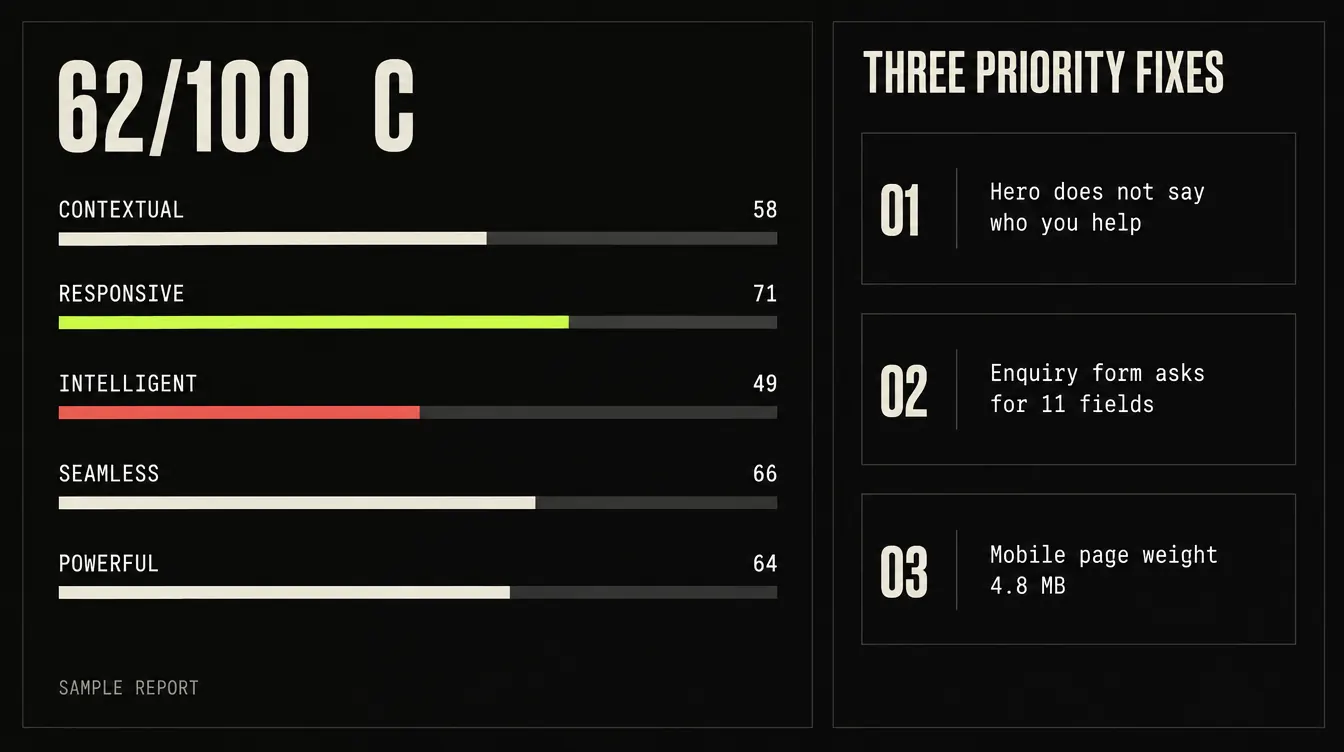
No, but it is a sensible first step if you are not sure what is wrong. The audit takes about 60 seconds, scores your current site across five dimensions and returns three priority fixes. That helps you decide whether you need a full redesign or something smaller. If you already have a clear brief, book a call and we can discuss it directly.
No. Enquiries depend on your offer, pricing, traffic, competition and how quickly you follow up, and rankings depend on factors nobody controls. Anyone who guarantees either is guessing. What we can do is remove the friction we find, set up the technical search foundations in scope, and agree how the new site will be measured so you can judge the change yourself.
Ownership of the design, code, content and accounts is written into the proposal before you commit, so nothing is left to assumption. As a rule, your domain, hosting and analytics accounts should sit in your name rather than a supplier's. If yours currently do not, we will flag it during the project so you are not locked in later.
A decision maker who can approve the scope, honest answers about your buyers and what they ask before they enquire, access to the current site and analytics, and any proof you have, such as testimonials or case studies. The proposal names who is responsible for content, reviews and sign-off, so nobody waits on something they did not know was theirs.
The proposal states what launch support and handover are included. After launch, we check that forms, analytics and redirects behave as intended. If you want ongoing help, such as SEO or conversion optimisation, that is scoped separately. You are never tied into a retainer to keep the site running.
Run the free CRISP audit for a scored first read of your site in about a minute, or bring an existing brief to a 15 minute call.
Not ready to talk? Read what a small business website costs in the UK.