


Stop looking interchangeable
A handshake photo and "trusted advisers" could belong to any firm. Say who you work for, where, and on what kind of problem.

By problem
Industries
 Our workSee all projects
Industries · accountancy and law firms
Websites for accountants and law firms have one job: help a referred client or a searcher see, within seconds, that you handle their situation, who they would deal with and how to start. We audit that journey with CRISP, then design and build the fixes, in plain English.
Your work is better than your website says.
Accountancy and law firms win most work through introductions and reputation. Then the prospect looks you up. For a few minutes, the website is the whole firm. If it reads like every other practice, hides the people and makes the next step hard, a warm introduction can go cold without anyone telling you.
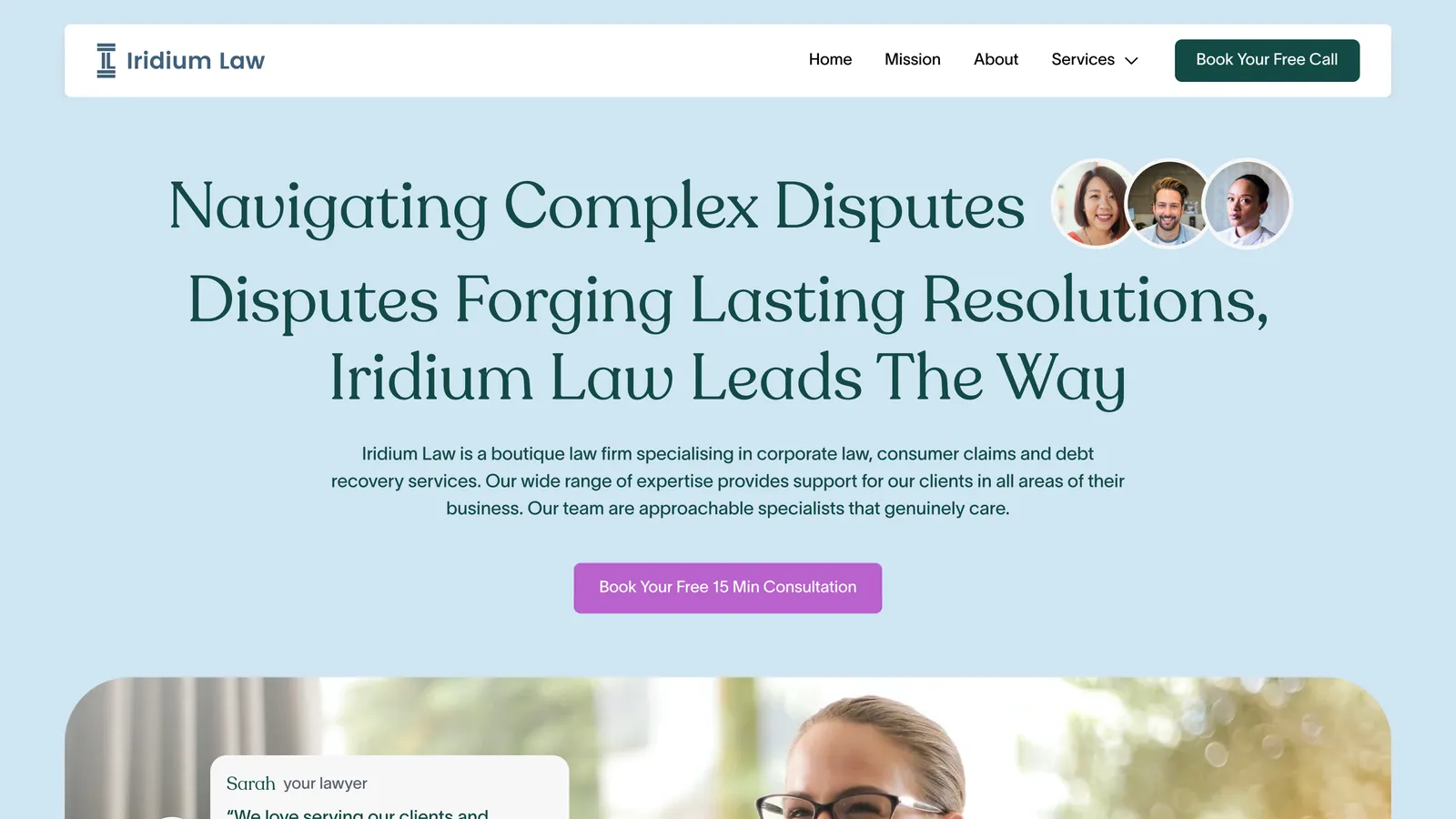
Iridium Law is a boutique London firm working in corporate law, consumer claims and debt recovery. We designed its website around one idea: a worried client should meet the lawyers before they read the legal detail.
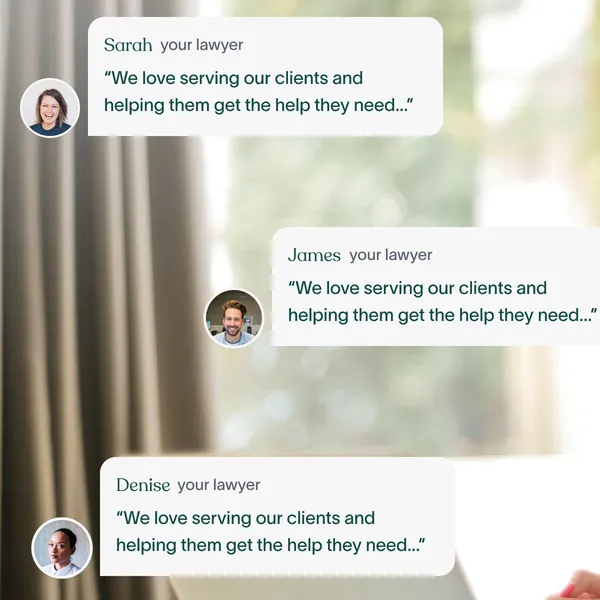
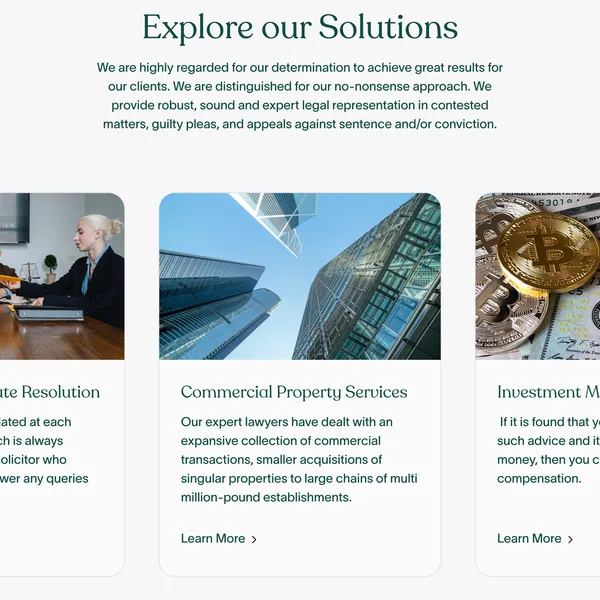
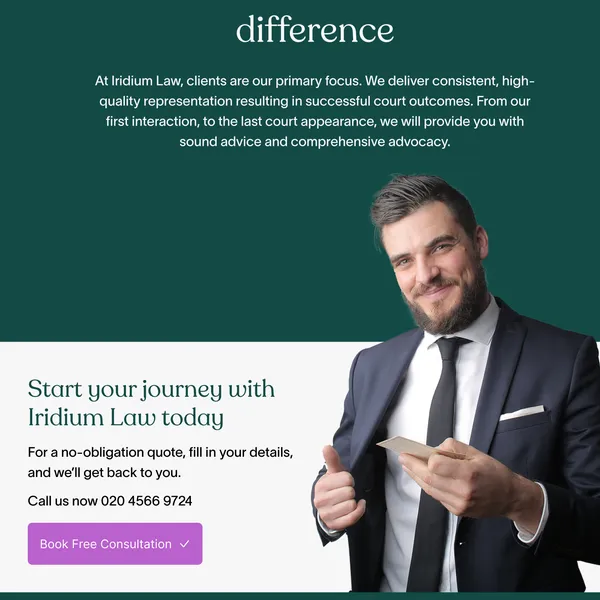
We do not have traffic or enquiry figures for this project, so we do not claim any. What you can judge is the thinking. The same thinking applies to an accountancy firm, where the client is worried about tax, not a court date.
Accountants and solicitors sell expertise that clients find hard to judge. A good website makes that expertise easy to see and easy to act on.
A handshake photo and "trusted advisers" could belong to any firm. Say who you work for, where, and on what kind of problem.
Clients pay more readily when they understand what the work covers. Clear service pages explain the scope, the stages and who does the work.
Named partners, solicitors and managers with photos and a line on what they do. The same pages tell a good applicant what it is like to work with you.
Visitors are often worried about tax, a dispute or money owed. Plain words and one clear next step help more than legal or technical language.
The questions are nearly the same in both sectors. The worry behind them is different.
| The visitor asks | Accountancy firm | Law firm |
|---|---|---|
| Do you handle my situation? | Owner-managed company, landlord, contractor, start-up | A dispute, a debt owed, a property deal, a claim |
| Who would I deal with? | A named partner or manager and their qualifications | A named solicitor, their experience and who supervises them |
| What will it cost? | How fees are set, fixed monthly or not, what switching involves | Costs information, stages and what is included, as SRA rules require for some services |
| How do you work? | Cloud software, response times, one named contact | How often they will hear from you, what happens at each stage |
| How do I start? | A short call or a simple enquiry form | A free first consultation and what to have ready for it |
Law firms offering certain services must publish costs information on their website. See the SRA Transparency Rules and the SRA's transparency guidance.
These are the patterns we check for across the five CRISP dimensions. Not every firm has all of them. The audit shows which ones apply to yours. Read how the CRISP method works for the full framework.
One caution: both sectors must describe regulated services, memberships and outcomes accurately. We write clear copy, then your compliance lead confirms anything that touches regulated activity before it goes live.
Each piece can stand alone. Your proposal names the work, review points and exclusions, so you only pay for what the evidence says the site needs.
See how projects are priced →We would rather tell you now than halfway through a project. The audit is useful either way.
Sole practitioners can still run the free audit and use the three priority fixes themselves. Accountancy firms can also read our website design for accountants page.
We know partners are busy around year ends, deadlines and hearings. Each review is kept short and specific.
Run the CRISP audit, then review your services, client types, proof, enquiry path, analytics where available and technical constraints.
Output: evidence, risks and prioritiesConfirm the page list, who reviews regulated wording, integrations such as booking or portal links, review rounds and exclusions.
Output: written scope and project planStructure first, then visual design, then the responsive build. You approve each stage before the next starts.
Output: approved pages and working websiteCheck forms, redirects, analytics, accessibility, metadata and mobile layouts, then hand over with a note of what was checked.
Output: checked release and handoverWant the detail? Read the full delivery process.
Straight answers, including the ones that do not flatter us.
There is no package price. A two-partner practice with four services needs a different scope from a multi-office firm with sector pages, costs information and a content migration. Cost follows the pages, content, proof, integrations and migration involved. The proposal states the scope, exclusions and price or pricing basis before you commit.
Yes. We designed the website for Iridium Law, a boutique London firm working in corporate law, consumer claims and debt recovery. The work shown on this page is our design. We do not have published results for it, so we show the design decisions rather than claim numbers. We do not yet have a published accountancy project.
We build space for it into the page plan, but we do not give legal or compliance advice. Law firms offering certain services must publish costs information under the SRA Transparency Rules, and accountancy bodies have their own rules on designations and logos. We write clear copy, flag anything that may need checking, and your compliance lead approves it before launch.
Usually more than it seems. A referral gives someone your name, and most will look you up before they call. At that point the website is checking whether you handle their situation, who they would deal with and how to start. A clear site supports the introduction. A vague one gives a warm lead a reason to stall.
It can make the firm easier to judge. Candidates check your site the same way clients do. Real people, a plain account of how you work and an honest careers page give a qualified applicant a reason to talk to you. We do not promise applicant numbers, but we can make sure the site does not put good people off.
No. Nobody can honestly guarantee enquiries or rankings, and you should be careful of anyone who does. We show the specific friction we found, explain why it may put a client off and agree how the change will be measured. You get evidence and a measurement plan, not a promise.
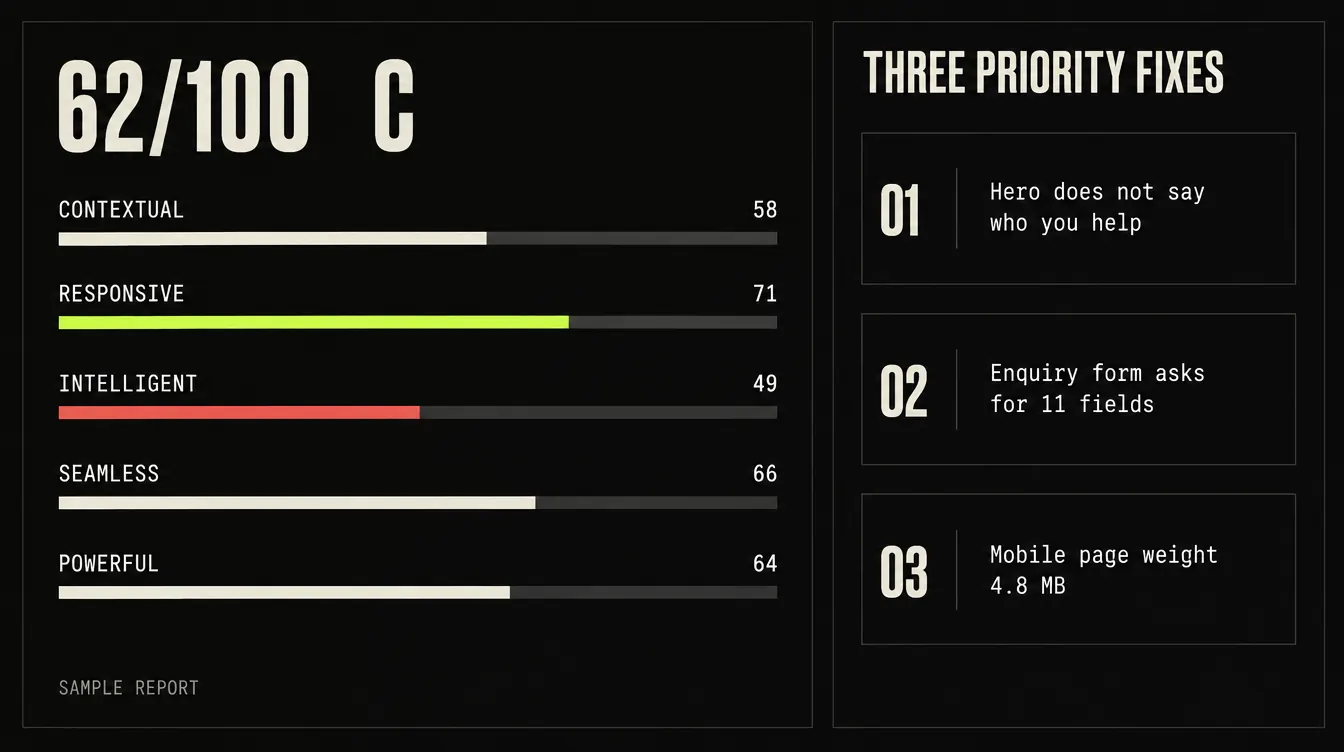
Run the free CRISP audit on your firm's website for a score and three priority fixes, or book a short call and we will look at it with you.
Not ready yet? Work through the accountancy website checklist, or read why visitors leave a website. More sectors on the industries page.